How Do You Choose Wedding Flowers That Match Your Style and Season?
Choosing wedding flowers that match your style and season requires balancing several key factors: your wedding’s aesthetic, the time of year, your colour palette, venue characteristics, and meaningful personal touches. Each element influences which blooms will look their best and align with your vision.
1. Consider Your Wedding Style
Your wedding style sets the foundation for flower selection. A romantic vintage celebration calls for different blooms than a sleek modern affair.
2. Understand Seasonal Availability
The season determines which flowers are at their freshest and most affordable—spring peonies won’t thrive in winter arrangements, whilst autumn dahlias reach their peak when summer blooms fade.
3. Coordinate with Your Colour Palette
Flowers should harmonise with your chosen palette, from soft pastels to bold jewel tones.
4. Take Venue Ambience into Account
The setting’s character influences arrangement scale and formality.
5. Add Personal Significance
Incorporating meaningful blooms or family heirlooms adds emotional depth.
The most successful flower choices emerge when these elements work together. A beach wedding in July naturally pairs with fresh summer hydrangeas in coastal blues, whilst a December ballroom celebration shines with elegant white roses and orchids. Understanding how each factor connects helps you choose wedding flowers that feel authentic to both your personal style and the season you’re celebrating.
What Role Does Wedding Style Play in Flower Selection?
Your wedding style serves as the foundation for every floral decision, from bloom type to arrangement structure. The aesthetic you choose—whether elegant, romantic, vintage, modern, or rustic—directly dictates which flowers will enhance your vision and which might clash with your overall atmosphere.
How Do Different Wedding Styles Influence Flower Choices?
1. Elegant Weddings
Elegant weddings call for sophisticated blooms with clean lines and refined beauty. Think orchids, calla lilies, and pristine white roses arranged with architectural precision. These flowers exude luxury and timeless grace, perfect for ballroom receptions and formal ceremonies.
2. Romantic Weddings
Romantic themes thrive on soft, delicate petals and lush textures. Peonies, garden roses, ranunculus, and sweet peas create dreamy arrangements that feel ethereal and tender. These blooms often feature gentle curves and abundant layers that evoke emotion and intimacy.
3. Vintage Weddings
Vintage-inspired celebrations benefit from blooms that recall bygone eras. Dusty miller, scabiosa, astilbe, and antique-hued roses in muted tones capture nostalgic charm. Pairing these with vintage brooches or lace wrapping amplifies the period-specific aesthetic.
4. Modern Weddings
Modern weddings demand bold choices and unexpected combinations. Proteas, anthuriums, succulents, and geometric arrangements with minimal foliage create striking contemporary statements. These wedding theme flowers often feature asymmetrical designs and unconventional colour pairings.
5. Rustic Weddings
Rustic celebrations embrace natural, unstructured beauty. Wildflowers, sunflowers, lavender, and wheat stalks arranged in loose, organic clusters complement barn venues and outdoor settings. The imperfect, garden-gathered appearance aligns perfectly with countryside charm.
How Does Bouquet Style Reflect Your Wedding’s Formality?
The bouquet style you select communicates volumes about your wedding’s tone and your personal preferences. Each shape carries distinct associations with formality levels and aesthetic sensibilities.
- Round bouquets: represent classic elegance and work beautifully for traditional ceremonies.
- Cascade bouquets: exude romance and are often chosen for more formal affairs.
- Asymmetrical bouquets: convey a modern sensibility and can be tailored to suit various styles.
- Hand-tied bouquets: offer a relaxed charm that complements informal or outdoor weddings.
Understanding these connections between bouquet shapes and wedding formality can help you make intentional choices that align with your overall vision.
Why Should You Consider the Season When Choosing Wedding Flowers?
Seasonal flowers arrive at your wedding at their peak freshness, offering vibrant colours and longer-lasting blooms whilst typically costing 30-50% less than out-of-season alternatives. Florists can source these blooms locally, reducing transportation costs and environmental impact whilst ensuring the flowers haven’t been stored for extended periods.
Spring Wedding Flowers
Spring Wedding Flowers bring delicate beauty and soft fragrance to ceremonies between March and May. Peonies reign as the most coveted spring bloom, available from mid-April through June with their lush, romantic petals in shades of blush, coral, and white. Sweet peas add a cottage garden charm with their ruffled petals and intoxicating scent, whilst purple tulips provide elegant structure to arrangements.
Other spring options include:
- Pink roses for classic romance
- Calla lilies for modern sophistication
- Iris for bold colour statements
- Freesias for budget-friendly fragrance
- Pink gerberas for cheerful pops of colour
Summer Wedding Flowers
Summer Wedding Flowers thrive in the warmth from June through August, offering abundant choices for larger arrangements. Hydrangeas create voluminous centrepieces and bouquets with their clustered blooms in blue, pink, purple, and white. These statement flowers pair beautifully with delicate ranunculus, which resemble miniature roses with paper-thin petals.
Summer’s bounty includes:
- Lilac for fragrant purple clusters (early summer)
- Coreopsis for sunny yellow accents
- Alstroemeria for long-lasting arrangements
- Calla lilies in vibrant summer hues
Autumn Wedding Flowers
Autumn Wedding Flowers showcase rich, warm tones perfect for September through November celebrations. Dahlias steal the spotlight with their dramatic blooms ranging from dinner-plate size to petite pompoms, available in burgundy, orange, peach, and deep purple. Asiatic lilies add height and elegance with their star-shaped flowers and bold colours.
Autumn selections feature:
- Bi-colour roses in sunset hues
- Orange gerberas for vibrant contrast
- Calla lilies in deep autumn shades
- Chrysanthemums
How Can Your Wedding Colour Palette Affect Flower Choices?
Your wedding colour scheme directly determines which blooms will enhance or clash with your overall design. Wedding flower colours should echo the hues in your bridesmaids’ dresses, table linens, and decorative elements to create a cohesive visual story throughout your celebration.
Soft Pastels for Romantic and Vintage Aesthetics
Pastel wedding flowers in blush pink, lavender, peach, and powder blue create an ethereal atmosphere perfect for romantic or vintage-themed celebrations. Sweet peas, garden roses, and ranunculus in these gentle tones pair beautifully with lace details and antique-inspired décor. These delicate shades photograph exceptionally well in natural light and complement ivory or champagne wedding gowns without overwhelming the bride’s appearance.
Bold Jewel Tones for Contemporary Celebrations
Modern weddings benefit from rich, saturated colours like emerald green, sapphire blue, ruby red, and amethyst purple. Calla lilies in deep burgundy, vibrant gerberas, and richly coloured dahlias make striking statements against minimalist venues or sleek contemporary spaces. These intense hues create dramatic focal points in centrepieces and bridal bouquets whilst maintaining sophistication through careful colour palette coordination.
Neutral Tones and Greenery for Natural Settings
Garden and beach weddings thrive with neutral-toned arrangements featuring whites, creams, and soft greens. Incorporating eucalyptus, olive branches, and ferns alongside white hydrangeas or cream roses creates organic, relaxed arrangements that harmonise with outdoor surroundings. These understated palettes allow the natural beauty of the venue to shine whilst providing elegant floral accents that won’t compete with scenic backdrops.
The Timeless Appeal of White Bouquets
Classic white bouquets remain the most versatile choice across all wedding styles and seasons. White roses, gardenias, phalaenopsis orchids, and calla lilies adapt seamlessly to formal ballrooms or casual outdoor settings. Adding varying textures through different white blooms—from the smooth petals of roses to the architectural form of orchids—creates depth and interest without introducing additional colours.
How Venue and Dress Influence Wedding Flower Choices
Your wedding venue and dress play a crucial role in deciding which flowers will look best on your special day. The atmosphere of your chosen location and the style of your gown work together to create a cohesive look. Let’s explore how these two factors influence your floral decisions.
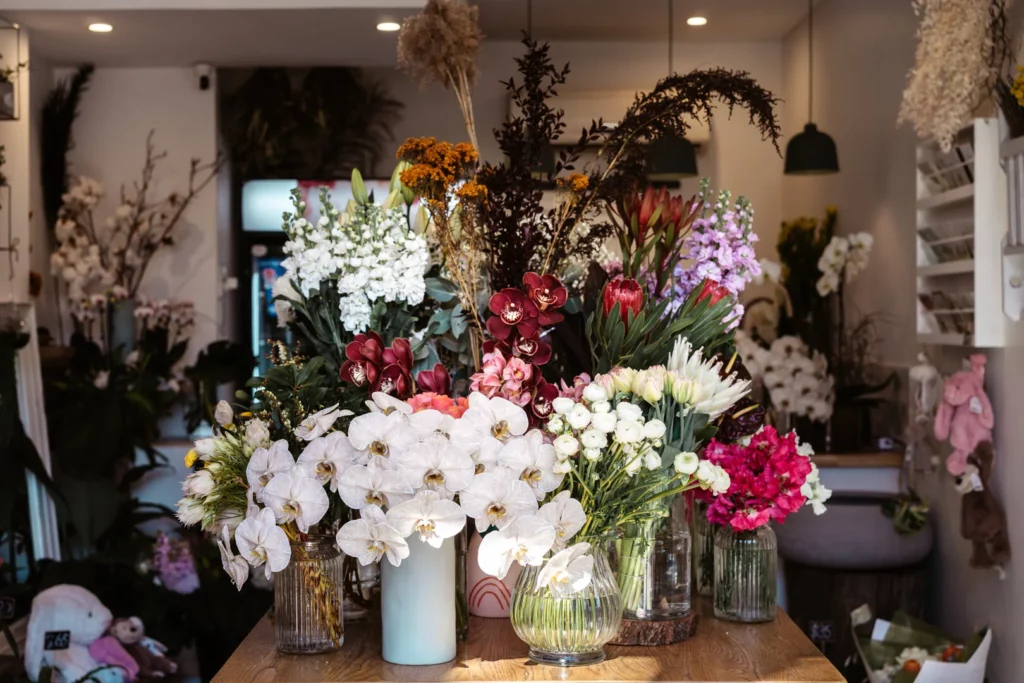
The Impact of Venue on Floral Design
The vibe and characteristics of your wedding venue have a significant impact on the type of flower arrangements that will suit the space. Here are some ways in which different venues can dictate your floral choices:
1. Indoor Venues
Indoor venues such as banquet halls, ballrooms, or historic mansions often have specific architectural features and design elements that can guide your flower selection. Consider the following:
- Ceiling Height: If your indoor venue has high ceilings, you can opt for larger, more dramatic floral installations that draw the eye upwards. This could include towering centrepieces or hanging installations.
- Existing Décor: Take into account the existing colours and décor of the venue. You want your flowers to complement the overall aesthetic rather than clash with it. For example, if the venue has warm-toned walls or furnishings, consider incorporating similar hues into your floral arrangements.
2. Outdoor Venues
Outdoor venues like gardens, beaches, or parks offer a different set of considerations when it comes to choosing flowers. Here are some factors to keep in mind:
- Natural Surroundings: Look at the natural elements present in the outdoor setting. Are there any specific flowers or plants that grow in that area? Incorporating local flora can create a beautiful connection between your wedding and its surroundings.
- Seasonality: Consider what flowers are in season during your wedding month. Choosing seasonal blooms not only ensures freshness but also helps tie in with the overall theme of nature.
The Influence of Wedding Dress on Bouquet Selection
Your wedding dress is another key factor that will influence which bouquet style works best for you. Here are some ways in which different dress styles can dictate your floral choices:
1. Silhouette
The silhouette of your gown can determine the shape of your bouquet:
- A-Line Dresses: A-line dresses have a fitted bodice and flared skirt. To maintain balance, opt for round or cascading bouquets that mirror the shape of the skirt.
- Mermaid Gowns: Mermaid gowns hug the body until just below the knee where they flare out. Long, trailing bouquets or asymmetrical arrangements can create visual interest without competing with the dress’s lines.
2. Neckline
The neckline of your dress also plays a role in determining which type of bouquet will complement it best:
- Sweetheart Necklines: Sweetheart necklines are flattering on many body types. Consider carrying a bouquet that sits just above waist level to accentuate this feature.
- V-Necks: V-neck dresses create an elongated effect. Long-stemmed bouquets or arm sheaf arrangements can enhance this illusion further.
Practical Examples for Different Combinations
Here are some practical examples showcasing how specific combinations of venue and dress styles can inspire floral choices:
- Beach Wedding + Bohemian Lace Dress: For a beach wedding where you’re wearing a bohemian lace dress, consider opting for loose, hand-tied arrangements featuring wildflowers such as daisies or poppies along with greenery like eucalyptus or ferns.
- Rustic Barn Wedding + Country Floral Dress: If you’re having a rustic barn wedding while donning a country floral dress, think about incorporating textured elements into your bouquets such as thistles or billy buttons paired with cottage garden favourites like peonies or dahlias.
By taking into account both your venue’s ambiance and your wedding dress proportions when selecting flowers, you can create an overall look that feels harmonious and beautifully coordinated!
How Can Personal Touches Make Wedding Flowers Unique?
Sentimental Flowers
Sentimental flowers transform ordinary bouquets into deeply meaningful keepsakes by incorporating blooms that hold special significance to your relationship or family history. Your grandmother’s favourite roses, flowers from the place you got engaged, or blooms that match your birth month create an emotional connection that extends beyond aesthetics.
Heirloom Embellishments
Heirloom embellishments woven into floral arrangements honour family traditions whilst adding distinctive character. Wrapping bouquet stems with lace from your mother’s wedding dress, securing arrangements with vintage brooches passed down through generations, or incorporating antique ribbon from a family christening gown creates tangible links to loved ones. These touches become conversation pieces that guests remember long after the celebration.
Personalised Bouquets
Personalised bouquets can feature non-floral elements that reflect your unique story as a couple. Consider these meaningful additions:
- Vintage photographs attached to bouquet stems with delicate ribbons
- Charms engraved with wedding dates or initials tucked amongst blooms
- Fabric flowers crafted from significant textiles like your partner’s childhood blanket
- Dried flowers from your first date or proposal preserved within fresh arrangements
- Religious medals or cultural symbols that represent your heritage
Colour Choices
The colour choices within your bouquet can carry personal meaning too. Selecting your partner’s favourite shade, incorporating school or university colours, or choosing hues that match a beloved family home adds layers of significance invisible to most guests but precious to you.
Scented Blooms
Scent plays a powerful role in memory, making fragrant blooms particularly meaningful. Gardenias might remind you of your grandmother’s garden, whilst lavender could evoke memories of a special holiday together. These aromatic choices create sensory experiences that transport you back to cherished moments each time you catch their scent in photographs or preserved arrangements. Click here to get more about romantic flower trends for Valentine’s day in Sydney.
When Are Artificial Flowers a Practical Alternative for Weddings?
Artificial wedding flowers offer a smart solution when your dream blooms are unavailable or when you’re working within strict budget constraints. Silk flowers eliminate the worry of seasonal limitations, allowing you to have peonies in December or dahlias in spring without the premium price tag that imported or greenhouse-grown flowers command.
Budget Considerations
Budget considerations make artificial flowers increasingly attractive. Fresh floral arrangements can consume 8-10% of your total wedding budget, whilst high-quality silk alternatives often cost 30-50% less. This significant saving allows couples to allocate funds to other priorities whilst still achieving stunning visual impact.
Destination Weddings
Destination weddings particularly benefit from artificial arrangements. Fresh flowers wilt during travel and struggle in extreme temperatures, but silk blooms maintain their appearance through flights, heat, and humidity. You can arrange them weeks in advance without refrigeration concerns or last-minute stress about delivery timing.
The Quality Factor in Silk Flowers Benefits
Modern silk flowers benefits extend far beyond cost savings. Premium artificial blooms now feature realistic textures, natural colour variations, and weighted stems that mimic fresh flowers convincingly. Touch one petal and you’ll notice the subtle imperfections and vein details that manufacturers deliberately include to replicate nature.
High-end silk flowers use materials like:
- Polyester and silk blends for soft, natural-looking petals
- Wire-reinforced stems for authentic draping and positioning
- Hand-painted details for depth and dimension
- Latex coatings for lifelike texture
The longevity advantage proves invaluable. Your bouquet becomes a permanent keepsake rather than something that wilts within days. Bridesmaids can take their arrangements home without worrying about preservation, and ceremony decorations can be reused for the reception or even sold afterwards.
Practical Scenarios for Choosing Artificial Options
Severe allergies make budget-friendly wedding flowers in artificial form a necessity rather than preference. Brides or guests with pollen sensitivities can enjoy elaborate floral displays without antihistamines or discomfort. This health consideration alone justifies the choice for many couples.
Outdoor summer weddings in scorching heat test even the hardiest fresh blooms. Roses droop, hydrangeas.
Why Is Florist Expertise Important in Choosing Wedding Flowers?
Professional florists bring invaluable seasonal knowledge and creative problem-solving to your wedding planning. Local florists understand which blooms thrive in your region during specific months, helping you avoid disappointment when certain flowers aren’t available or are prohibitively expensive.
Local florist advice extends beyond simple flower selection. These professionals maintain relationships with growers and suppliers, giving them insider knowledge about upcoming harvests and quality variations throughout the year. They can suggest stunning alternatives when your dream flower isn’t in season, often introducing you to varieties you hadn’t considered.
Other Resources : Seasonal blooms all year round!
How Do Florists Help Match Your Vision to Your Budget?
Florists excel at translating abstract ideas into tangible arrangements. When you describe your wedding aesthetic—whether “romantic garden party” or “minimalist modern”—experienced florists immediately know which blooms, textures, and arrangement styles will achieve that look.
Budget optimisation is where florist seasonal knowledge truly shines. They can:
- Recommend cost-effective substitutes that maintain your desired aesthetic
- Suggest ways to maximise impact with fewer premium blooms
- Identify which flowers offer the best value during your wedding month
- Advise on repurposing ceremony flowers for the reception
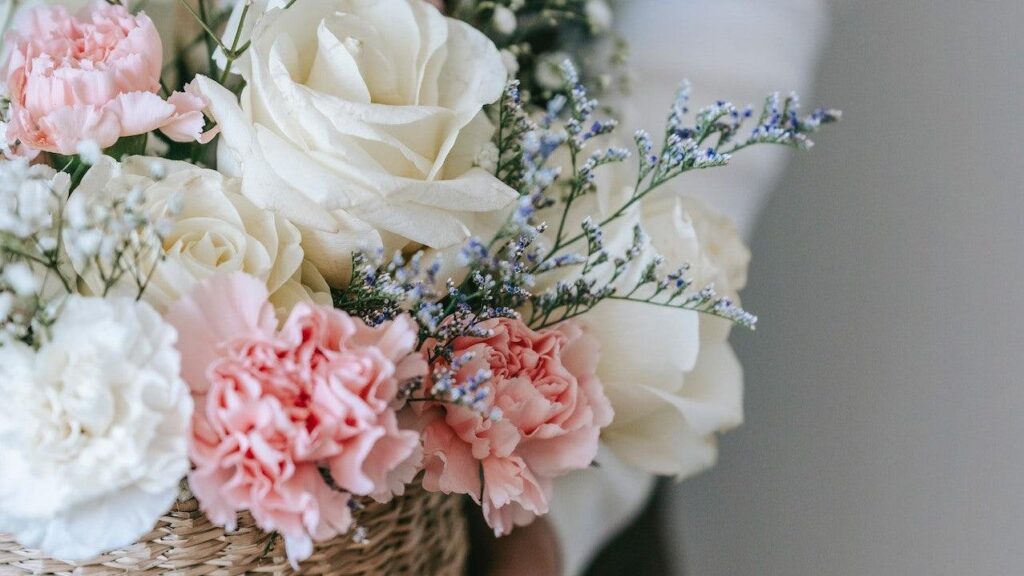
What Should You Bring to Your Florist Consultation?
Prepare for your consultation by gathering inspiration photos, fabric swatches from bridesmaid dresses, and venue photographs. Share your complete vision—including dress style, venue atmosphere, and colour palette—so your florist can create cohesive recommendations.
Discuss your priorities openly. If fragrance matters more than specific varieties, or if you’re flexible on colours but committed to certain blooms, communicate these preferences. Florists appreciate clear guidance on non-negotiables versus areas where you trust their expertise.
Can Florists Source Unusual or Specific Flowers?
Professional florists have access to wholesale markets and specialty growers that aren’t available to the public. If you’re determined to include a particular bloom, they can investigate sourcing options and provide realistic timelines and costs.
For destination weddings or imported varieties, florists assess feasibility based on shipping requirements and flower durability. They’ll advise whether your chosen blooms can withstand transport and remain fresh throughout your celebration.
FAQs (Frequently Asked Questions)
How do I choose wedding flowers that match my style and season?
To choose wedding flowers that complement your style and season, consider factors such as your overall wedding theme (elegant, romantic, vintage, modern, rustic), seasonal availability of blooms, colour palette coordination, venue aesthetics, and personal touches. Selecting in-season flowers ensures freshness and cost-effectiveness while aligning with your desired look.
What role does wedding style play in selecting the perfect bouquet?
Wedding style significantly influences flower selection. For example, an elegant or formal wedding might feature classic round bouquets, while a rustic or vintage theme could incorporate hand-tied or cascading styles. Matching bouquet formality and flower types to your wedding theme ensures cohesion and reflects personal taste.
Why should I consider the season when choosing my wedding flowers?
Choosing seasonal flowers offers benefits like enhanced freshness and reduced costs. Each season brings unique blooms: spring features peonies, summer offers hydrangeas, autumn showcases dahlias, and winter highlights white roses. Selecting flowers in season aligns your floral arrangements with natural beauty and availability.
How can my wedding colour palette affect my flower choices?
Your wedding colour scheme guides flower selection to create harmony. Soft pastels suit romantic or vintage weddings, while bold jewel tones complement modern themes. Neutral tones and greenery work well for garden or beach weddings. Classic white bouquets provide versatile elegance across various palettes.
In what ways do venue and dress influence the choice of wedding flowers?
Venue ambiance shapes flower arrangement styles to match its aesthetics—for instance, rustic venues pair well with wildflower arrangements. Additionally, bouquet size and shape should complement your dress style and bride height; cascading bouquets suit sleek gowns, whereas smaller bouquets are ideal for petite brides to maintain proportion.
How can personal touches make my wedding flowers unique?
Incorporating sentimental elements like heirloom embellishments or meaningful blooms adds emotional significance to your floral arrangements. Personalised bouquets featuring keepsakes such as lace from family dresses create unique designs that reflect your story and make your wedding flowers truly one-of-a-kind.